QIS-Powered ETPs: A Better Product Stack Onchain
How QIS-powered ETPs combine machine learning, onchain composability, and smart contracts operational efficiency to improve risk-adjusted outcomes.

QIS-powered ETPs are a practical way to upgrade basket investing for institutional allocators. They combine the distribution advantages of exchange-traded wrappers with the rigor of quantitative portfolio construction.
The core idea is simple: use QIS methodology to continuously improve diversification and risk-adjusted performance, then deploy that logic through programmable onchain vault infrastructure.
In this note, we use the 21Shares Bitcoin Gold ETP and the Vinter ByteTree BOLD1 methodology as a public reference benchmark (21Shares & Vinter methodology), then show how both QIS-driven upgrades and onchain integrations improve risk-adjusted performance step by step.
Starting point: faithful replication of a public benchmark
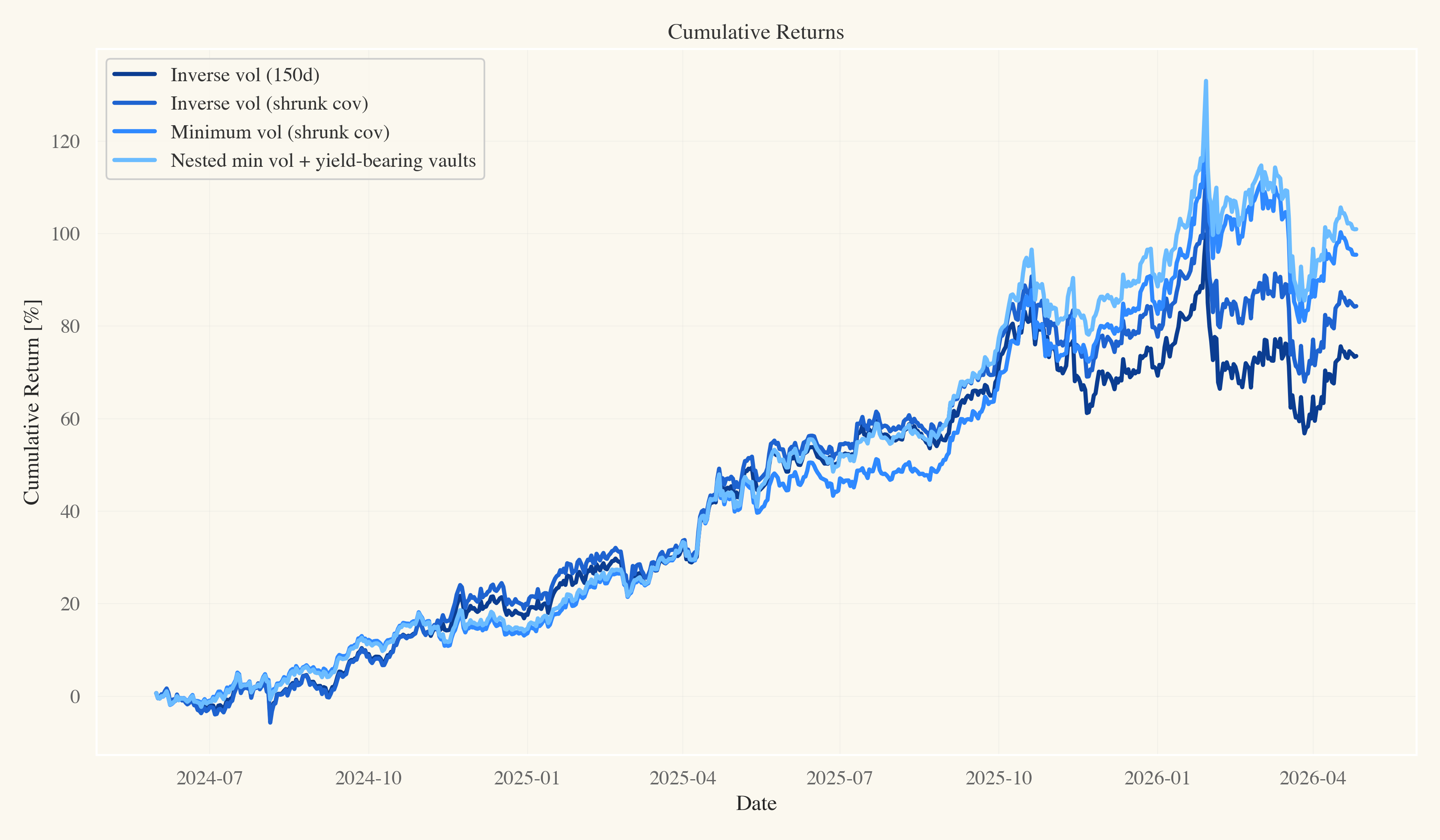
As a baseline, we reproduce the reference inverse-volatility methodology using sample volatility estimation (Sharpe ratio: 1.22):
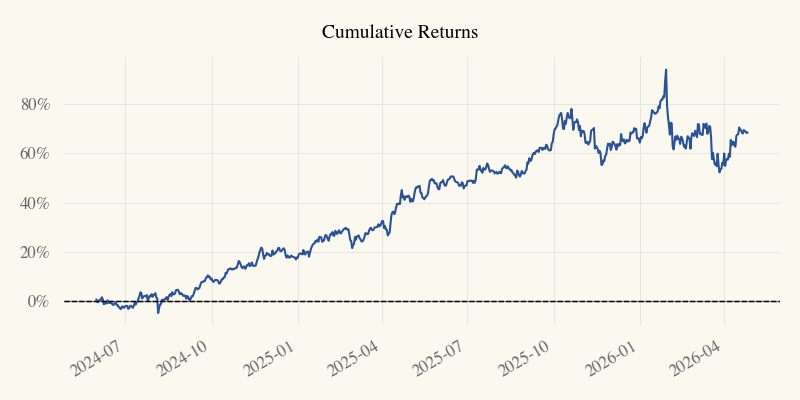
This provides a clean baseline for attribution.
QIS upgrade 1: better risk estimation with financial machine learning
The first upgrade keeps the same inverse-volatility construction, but replaces naive sample estimates with skfolio-based routines and shrunk covariance estimation (Sharpe ratio: 1.36):
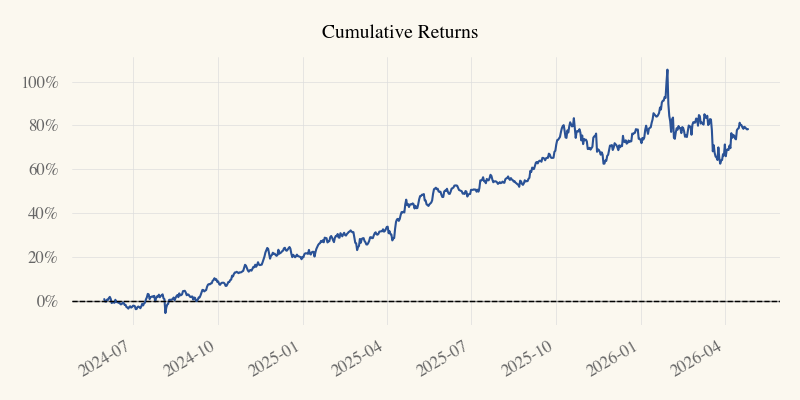
This improves robustness of risk estimates, especially in noisy regimes.
QIS upgrade 2: move from inverse volatility to minimum volatility
The second upgrade addresses a structural limitation: inverse-volatility weighting does not fully use cross-asset correlation information.
We therefore move to minimum-volatility under the same risk estimation framework (Sharpe ratio: 1.59):
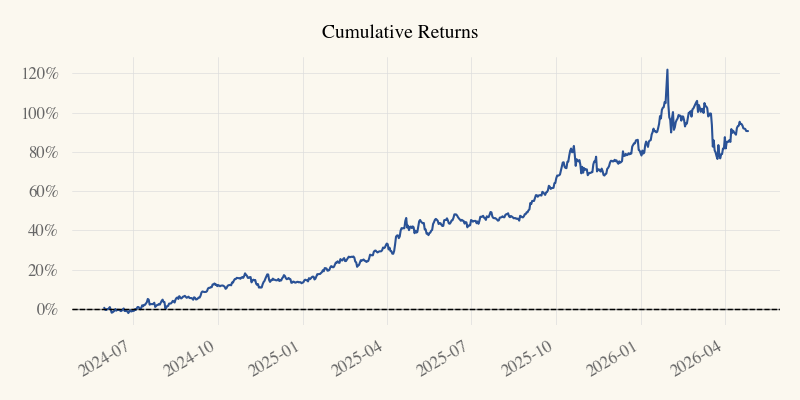
This shifts from sleeve-by-sleeve scaling to optimizing the joint basket.
DeFi upgrade: onchain yield-bearing implementation
The final upgrade comes from implementation. By accessing BTC/XAU-denominated yield-bearing vaults onchain, the strategy keeps the diversification profile while adding an onchain-native return component (Sharpe ratio: 1.74):
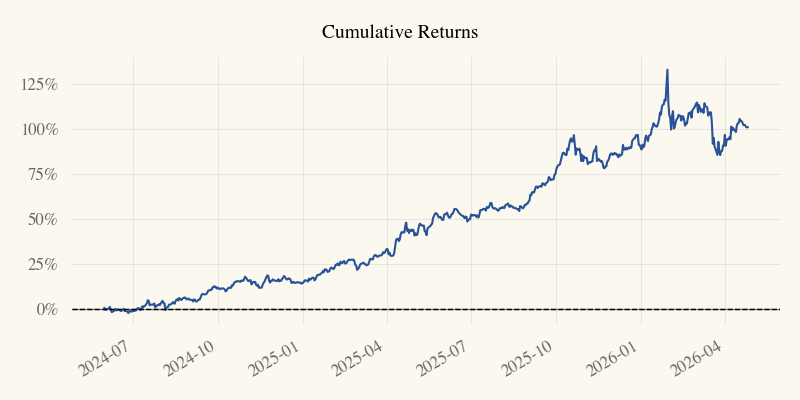
Why onchain vault implementation matters
These results are shown on nominal returns only. They do not yet include additional operational efficiency (10s of bps) from automating methodology execution, rebalancing, and controls through Orion smart contracts.
This is the key contrast between offchain basket products (such as ETPs) and onchain DeFi vaults: the portfolio logic may be similar, but the operating model is fundamentally different.
In offchain structures, a meaningful share of cost and friction sits in manual or fragmented operational layers. In vault-based onchain structures, these layers become programmable and continuously executable:
- benchmark maintenance,
- portfolio management operations,
- execution and rebalancing workflows,
- accounting and NAV tracking,
- reconciliation overhead.
As these functions are streamlined, vault-based products can preserve basket exposure while delivering materially better operational efficiency.
Conclusion
Onchain vault implementation is not only a distribution channel, it is a product-improvement engine.
For institutional allocators, the implication is strategic, not incremental. The ability to combine quantitative methodology with programmable operations creates a structurally better product model: faster iteration cycles, tighter risk control loops, and lower operational drag.
References
- 21Shares & Vinter. 21Shares Vinter ByteTree BOLD Indexes Methodology.
- Nicolini, C., Manzi, M., & Delatte, H. (2025). skfolio: Portfolio Optimization in Python. arXiv.
- Ledoit, O., & Wolf, M. Honey, I Shrunk the Sample Covariance Matrix.
Frequently Asked Questions
- What benchmark does this analysis use?
- The note reproduces the public 21Shares & Vinter ByteTree BOLD1 inverse-volatility methodology as a baseline, then applies QIS upgrades and onchain implementation layers step by step for attribution.
- Why move from inverse-volatility to minimum-volatility weighting?
- Inverse-volatility assigns weights in proportion to the inverse of each asset's volatility, largely ignoring correlations between sleeves. Minimum-volatility optimization uses the full covariance structure to construct a joint basket with lower expected volatility under the same estimation framework.
- What does skfolio contribute to the analysis?
- skfolio provides portfolio optimization routines, including shrunk covariance estimation that tends to be more robust than naive sample estimates, especially in noisy or regime-shifting environments.
- Why does onchain vault implementation matter beyond returns?
- Vault-based structures automate methodology execution, rebalancing workflows, accounting, and reconciliation. Those functions often sit in manual offchain layers for traditional ETPs; onchain they become continuous and programmable, which can materially reduce operational friction.
- Are the Sharpe figures in this note all-in?
- The published stepwise results are shown on nominal returns and do not yet include additional operational efficiency from smart-contract automation. The comparison is intended to isolate methodology and implementation upgrades sequentially.
- What is the strategic takeaway for institutional allocators?
- Combining quantitative methodology with programmable operations creates a structurally different product model: faster iteration cycles, tighter risk control loops, and lower operational drag, not merely a new distribution wrapper around the same offchain process.